Saturday, July 21, 2012

I'm gonna have to move

Oregon: Cannabis Tax Act Qualifies For November Ballot

Oregon: Cannabis Tax Act Qualifies For November BallotSalem, OR: A statewide proposal that seeks to allow for the regulated sale of cannabis to those over age 21 will appear on the November electoral ballot.
A spokesperson for the Oregon Secretary of State's office on Friday confirmed that proponents of The Oregon Cannabis Tax Act (OCTA) had collected sufficient signatures from registered voters to qualify the initiative for the 2012 ballot.
If passed by voters this fall, OCTA (Measure 80) would allow for the state-licensed production and retail sale of cannabis to adults. OCTA campaign proponents estimate that retail sales of cannabis would yield approximately $140 million annually, 90 percent of which would be directed toward the state's general fund.
The cultivation or possession of cannabis for non-commercial purposes would not be subject to state licensing or taxation.
The measure also seeks to allow for the sale of cannabis for therapeutic purposes to qualified patients "at cost" and allows for the production of industrial hemp. Oregon voters in 1998 approved legislation by voter initiative legalizing the use, possession, and cultivation of cannabis for medicinal purposes.
A June 2012 survey of 686 Oregon voters conducted by the firm Public Policy Polling reported that Oregonian's were divided on the issue. Forty-three percent of respondents said that they supported legalizing marijuana, while 46 percent of respondents opposed the idea. Men, self-identified Democrats and Independents endorsed legalization, while women and self-identified Republicans opposed it.
Voters in at least four other states - Colorado, Massachusetts, Montana, and Washington - will also be deciding on marijuana-specific ballot measures this November. In Massachusetts, voters will decide on Question 3, a statewide proposal that seeks to allow for the possession and state-licensed distribution of cannabis for therapeutic purposes. Montana voters will decide on Initiative Referendum 124, which seeks to repeal amendments enacted by lawmakers in 2011 to restrict the state's 2004, voter approved medical cannabis law. Colorado voters will decide on Amendment 64, which would immediately allow for the possession of up to one ounce of marijuana and/or the cultivation of up to six cannabis plants by those persons age 21 and over. Longer-term, the measure seeks to establish regulations governing the commercial production and distribution of marijuana by licensed retailers. In Washington, voters will decide on Initiative 502, which seeks to legalize and to regulate the production and sale of limited amounts of marijuana for adults.
An Arkansas measure that seeks to legalize the use of marijuana as medicine remains pending. On Friday, a spokesperson for the Secretary of State's office affirmed that petitioners Arkansans for Compassionate Care would have an additional 30 days to gather signatures in favor of the measure. Petitioners need to gather an additional 26,000 signatures from registered voters to qualify the measure for the November 2012 ballot.

Sunday, June 24, 2012

Forms

Unprocessed

Dried Cannabis flowers in natural herbal form
The terms cannabis or marijuana generally refer to the dried flowers and subtending leaves and stems of the female cannabis plant.[citation needed] This is the most widely consumed form, containing 3% to 22% THC.[29][30] In contrast, cannabis varieties used to produce industrial hemp contain less than 1% THC and are thus not valued for recreational use.[31]

Processed

Kief

Kief is a powder, rich in trichomes, which can be sifted from the leaves and flowers of cannabis plants and either consumed in powder form or compressed to produce cakes of hashish.[32]

Hashish

Hashish
Hashish (also spelled hasheesh, hashisha, or simply hash) is a concentrated resin produced from the flowers of the female cannabis plant. Hash can often be more potent than marijuana and can be smoked or chewed.[33] It varies in color from black to golden brown depending upon purity.

Hash oil

BHO
Hash oil, or "butane honey oil" (BHO), is a mix of essential oils and resins extracted from mature cannabis foliage through the use of various solvents. It has a high proportion of cannabinoids (ranging from 40 to 90%).[34] and is used in a variety of cannabis foods.

Residue (resin)

Because of THC's adhesive properties, a sticky residue, most commonly known as "resin", builds up inside utensils used to smoke cannabis. It has tar-like properties but still contains THC as well as other cannabinoids. This buildup retains some of the psychoactive properties of cannabis but is more difficult to smoke without discomfort caused to the throat and lungs. This tar may also contain CBN, which is a breakdown product of THC. Cannabis users typically only smoke residue when cannabis is unavailable. Glass pipes may be water-steamed at a low temperature prior to scraping in order to make the residue easier to remove.[35]

Routes of administration

A forced-air vaporizer. The detachable balloon (top) fills with vapors that are then inhaled.
A conduction vaporizer, with flexible extension tube ("whip"). A small serving of cannabis is heated on a metal platform (center).
Cannabis is consumed in many different ways, most of which involve inhaling vaporized cannabinoids ("smoke") from small pipes, bongs (portable version of hookah with water chamber), paper-wrapped joints or tobacco-leaf-wrapped blunts.
A vaporizer heats herbal cannabis to 365–410 °F (185–210 °C),[citation needed] causing the active ingredients to evaporate into a vapor without burning the plant material (the boiling point of THC is 390.4 °F (199.1 °C) at 760 mmHg pressure).[36][not in citation given] A lower proportion of toxic chemicals is released than by smoking, depending on the design of the vaporizer and the temperature setting. This method of consuming cannabis produces markedly different effects than smoking due to the flash points of different cannabinoids; for example, CBN (usually considered undesirable) has a flash point of 212.7 °C (414.9 °F)[37] and would normally be present in smoke but not in vapor.
Fresh, non-dried cannabis may be consumed orally. However, the cannabis or its extract must be sufficiently heated or dehydrated to cause decarboxylation of its most abundant cannabinoid, tetrahydrocannabinolic acid (THCA), into psychoactive THC.[38]
Cannabinoids can be extracted from cannabis plant matter using high-proof spirits (often grain alcohol) to create a tincture, often referred to as Green Dragon.
Cannabis can also be consumed as a tea. THC is lipophilic and only slightly water-soluble (with a solubility of 2.8 mg per liter),[39] so tea is made by first adding a saturated fat to hot water (i.e. cream or any milk except skim) with a small amount of cannabis.


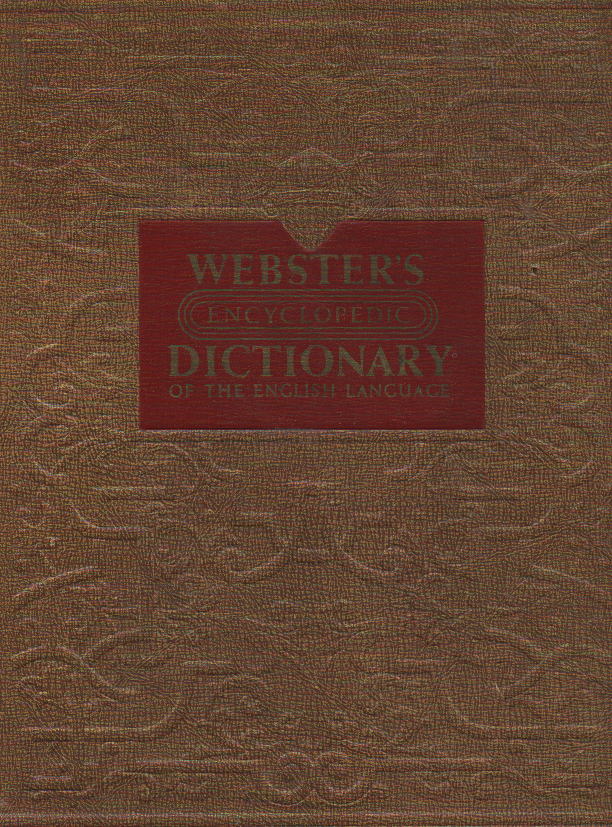
Websters Dictionary - Marijuana
 
WEBSTER'S ENCYCLOPEDIC DICTIONARY OF THE ENGLISH LANGUAGE Copyright 1957 - H.S. STUTTMAN Co.
(from page 2681) marijuana or marihuana (ma re hwa na) n. A weed or herb, growing in many parts of North America; the dried leaves of the plant, which have narcotic qualities when smoked in cigarettes; sometimes called the assassin of youth.
Marijuana, or Hashish, a subtle, crazing drug which is being surreptitiously sold in U.S. in the form of cigarettes. Narcotic officials named it 'The Assassin of Youth,' and state that it is as dangerous as a coiled rattlesnake. Its effects when smoked vary with different Individuals. It may make of its victim a philosopher, a joyous reveler, a mad insensate, or a fiendish murderer. Its purveyors whisper into the ears of Am. youth the wonders of a new cigarette with a real thrill, and without harmful effects. Students are lured to its use by promises of resultant keenness of mind, the easy solving of problems, an aid in exams. An addict was hanged in Baltimore in 1937 for a criminal assault on a ten-year-old girl. In Fla. a crazed youth killed his father, mother, two brothers, and a sister. In more than 30 cases of murder or degenerate sex crimes in 1937, marijuana proved to be a contributing cause. See Hashish.
(page 1976) HEMP (hemp) n. 1 A tough-fiberded plant from which rope and certain coarse fabrics are made. 2. Hashish, a narcotic and intoxicating drug obtained from the Indian hemp. 3. Slang. The rope used for hanging people. Hemp'en adj.
Hemp, commercial name for the textile fibers yielded by several unrelated plants, but strictly used only to describe those produced by Cannabis sativa, native to s. Russ., Per., and parts of China. This plant is characterized by a straight undivided stalk, usually from five to eight ft. high, but sometimes attaining a height of 18 ft. The best hemp comes from Italy; it is also cultivated in Russ., the Philippines and elsewhere. It is mostly used in the mfr. of rope and strong twine, and is woven into sail-cloth and fire-hose. For making canvas and sacking it has been largely replaced by jute, which is cheaper. The Arabs give the name hashish to a preparation of the leaves. Hemp also has useful medicinal properties.

Thursday, May 31, 2012

Watch this video and ask yourself why marijuana has not been Legalized.

Tuesday, May 22, 2012

New Poll 56% of Americans Want Legal Marijuana

On May 12, 2012, Rasmussen Reports conducted a survey of 1,000 likely voters nationwide. They asked, “Would you favor or oppose legalizing marijuana and regulating it in the similar manner to the way alcohol and tobacco cigarettes are regulated today?”
The poll affirms, once again, that the tide of public opinion continues to turn in our favor. Fifty-six percent of respondents stated they would support legalizing and regulating marijuana in a similar manner alcohol and tobacco. Only 36% were opposed to the concept and 8% were undecided.
You can view more information about the poll on Rasmussen Reports’ website here.
A previous poll conducted by Rasmussen Reports in April reported that 47% of adults “believe the country should legalize and tax marijuana in order to help solve the nation’s fiscal problems.” Forty-two percent of respondents disagreed, while ten percent were undecided.
In 2011, a nationwide Gallup poll reported that 50 percent of Americans support legalizing the use of cannabis for adults. Forty-six percent of respondents said they opposed the idea.
The 2011 Gallup survey results marked the first time that the polling firm, which has tracked Americans’ attitudes toward marijuana since the late 1960s, reported that more Americans support legalizing cannabis than oppose it.

Form a Study Committee on Marijuana Policy

Indiana
-------
State Sen.  Karen Tallian wants to make most marijuana possession cases misdemeanors.  What a change that would be from a toke-free Indiana. 

Tallian, D-Ogden Dunes, did not request a committee vote on Senate Bill 347 but took nearly an hour to explain how reducing criminal penalties for marijuana possession could benefit Indiana. 

It would have the effect of freeing up at least 250 beds a year in the state prison system and thousands of beds in county jails, according to the nonprofit Legislative Services Agency. 

In Indiana, possession of an amount of marijuana is punishable by up to a year in jail and a $5,000 fine.  That's among the toughest penalties in the nation. 

"Marijuana possession is a victimless crime, and there's no reason to do this to our citizens, especially our our young people," Tallian said. 

But is it truly a victimless crime?

We have been told for years that marijuana is a gateway drug that leads to more serious illegal drugs.  That argument must not be ignored in the discussion of whether to ease penalties for marijuana possession. 

And does medicinal use of marijuana actually fight disease and ease symptoms, or would it simply create a state full of hypochondriacs who see various maladies as a way to legally possess an otherwise illegal substance?

The Criminal Law and Sentencing Policy Study Committee discussed this issue July 28, but four hours of conversation on this issue aren't enough to reach a consensus on the ramifications of easing penalties. 

This is a subject that should be discussed by a separate legislative study commission this summer to weigh both the financial costs of enforcement and the social cost on people who use marijuana as an entry drug, leading to more dangerous drugs. 

Tallian said she "wanted to continue laying the groundwork" instead of asking for a vote in an election year.  Part of that groundwork should be pressing for the study commission to come up with definitive answers on the costs and benefits of easing penalties for marijuana possession.

Does Oprah Smoke Weed?


How Weed Works... THC


Legalizing Pot Will Profit the Nation

LEGALIZING MARIJUANA WILL PROFIT THE NATION

by David C. Kolbe, (Source:Journal Gazette)
More News
Check State Laws

18 Mar 2012
Share This Article Share This Article on del.icio.us Share This Article on digg Share This Article on Stumble Upon Share This Article on Facebook Share This Article on Twitter

Indiana
-------
For many years there has been a "war on drugs" in this country. 

The phrase was itself a piece of propaganda authored by John Ehrlichman, President Richard Nixon's assistant on domestic affairs.  Integral to this "war" has been an extensive and expensive assault on a substantial portion of American society people who use marijuana.  Not only has it been wrong; it is a terrible failure. 

My opinion, shared by a growing number of conservative, liberal and libertarian thinkers did not arise out of thin air. 

I have dedicated more than 30 years of my life to the criminal justice system.  I have served as county prosecutor and defended thousands of people within that time.  I have worked with every part of the criminal justice system from beginning to end.  I have seen the enforcement, prosecution and sentencing of those who smoke pot. 

And my opinion is that criminalizing those who use pot is wrong and is a waste of time and money.  Rather than branding our citizens, this state should legalize, regulate and tax pot. 

There are two types of crimes in the criminal justice system.  The first we call malum in se.  This means the crime is rooted in evil.  Nearly every society throughout history has considered these acts as crimes: rape, robbery, murder, to name of few. 

The other types of crimes are called malum prohibitum.  These are defined as crimes based upon social expectations or regulations and are often victimless.  The person is not necessarily acting with evil intent.  He or she is violating a regulation.  This is just where pot fits in. 

There are other reasons why pot should be legalized.  One is purely economic.  Under the current scheme, illegality means drug cartels make tons of money.  It issimple macro-economics. 

Another reason harkens back to our Bill of Rights.  I contend the government has no business telling me what I can or cannot ingest on my own property or the private property of another.  As long as my activity harms no one else, the government should keep its nose out of my business. 

The truth is that quite a number of people within the system agree with what I have said here.  They are simply reluctant to speak out because of their jobs.This is also true of a number of politicians too.  We can all understand their reluctance. 

However, I prefer to no longer keep silent.  It is time to de-criminalize pot. 


Powered by MAPMAP posted-by: Jay Bergstrom


Share This Article Share This Article on del.icio.us Share This Article on digg Share This Article on Stumble Upon Share This Article on Facebook Share This Article on Twitter Pubdate: Sun, 18 Mar 2012
Source: Journal Gazette, The (Fort Wayne, IN)
Copyright: 2012 The Journal Gazette
Contact: letters@jg.net
Website: http://www.journalgazette.net/
Details: http://www.mapinc.org/media/908
Author: David C. Kolbe
Note: David C. Kolbe is a Warsaw attorney and was the Kosciusko
County prosecutor from 1995 to 1998. He wrote this for Indiana newspapers.
Bookmark: http://www.mapinc.org/decrim.htm (Decrim/Legalization)

Sunday, May 20, 2012

Willie n Weed


What Is President Obama’s Problem With Medical Marijuana?
via Time.com
[T]he Obama Administration is cracking down on medical marijuana dispensaries and growers just as harshly as the Administration of George W. Bush did. In 2011, the Department of Justice revised its guidance to U.S. Attorneys, allowing them to target any medical marijuana activity except for ill patients and their immediate caregivers. The Drug Enforcement Administration has made it clear that “medical marijuana is not medicine,” and even called it a “mortal danger.” … In many states, U.S. Attorneys have advised state and local officials to back away from plans to create rules and regulations that would codify the medical pot industry, in some cases raising the possibility that lawmakers could be prosecuted for promoting drug use that is legal under state law.
Over the last few weeks, I have talked with nearly a dozen people in the medical marijuana business, three U.S. Attorneys, White House officials and local officials who oppose the federal crackdown for a story that will appear in this week’s newsstand issue of TIME. The answer on the ground is, predictably, far more complicated than either medical marijuana advocates or the Obama Administration is willing to describe. And it all comes down to this: Despite Obama’s promises during the 2008 campaign, federal prosecutors have lost faith in the ability of state and local officials to control a booming commercial industry for a drug that is still illegal to grow, possess or sell under federal law. As a result, a once broad exemption from prosecution for medical marijuana providers in state where it’s legal has been narrowed to a tiny one. … [T]he nation is left with an uneasy status quo: The federal government is not trying to eliminate medical marijuana altogether, but it has decided that it cannot stand for the commercialization or large scale production of marijuana for the stated purpose of helping the sick, even when that production is technically within the bounds of state law.
[I]n a different world, the federal government might work with state and local officials to more tightly regulate the growing of marijuana for medical purposes. But since pot is illegal under all circumstances under federal law, the opposite has been happening. Attempts, particularly in California, to more tightly regulate and thereby provide greater legal protection for the drug, have been shut down by the federal government.
And so, medical marijuana is left in a no man’s land. Individual sick users are safe from prosecution, but they are likely to find it harder in the coming months to get the drug. Growers and dispensers are not protected by state law from federal prosecution, especially if they become large enough to get noticed by federal investigators. And the likely result is that more of the medical marijuana industry will be pushed underground in the coming years, making it more difficult for local officials to track the business. This arguably will only increase some criminal activity, as large amounts of money and a very profitable commodity move through the system by way of small-time dealers working without sophisticated security systems.
…“What this really screams for a cohesive national policy.”
But there is no such policy on the horizon. Obama has shown little interest in elevating the issue. Some in federal law enforcement–and at the Office of National Drug Control Policy–hope that the advent of new pharmaceutical replacements for grown medical marijuana, like the Canadian drug Sativex, [Editor's note: Sativex is a British drug, not a Canadian manufactured product -- though it is legal by prescription in Canada.] will make the entire issue moot in the coming decade. But that looks unlikely in the short term, given the lack of concern among the general public with medical marijuana. A 2010 poll by the Pew Center for the People and the Press found that 73% say they favor “their state allowing the sale and use of marijuana for medical purposes if it is prescribed by a doctor.”
In other words, don’t hold your breath for clarity anytime soon. The haze is here to stay.
Criminal marijuana prohibition is a failure. Over 20 million Americans have been arrested for marijuana offenses since 1965. NORML believes that the time has come to amend criminal prohibition and replace it with a system of legalization, taxation, regulation, and education.

Sunday, January 22, 2012

Medical Marijuana Measure Introduced in the Indiana Legislature

Tell Your Member of the House to Support HB 1370!
A measure seeking to legalize and regulate the physician-supervised use of medical marijuana has been introduced in the Indiana Legislature.
House Bill 1370 amends state law so that physician-supervised patients with an authorized "debilitating medical condition" can obtain limited quantities of marijuana for medical purposes. It would also allow for the establishment of state-licensed medical marijuana dispensary facilities. Full text of the measure can be read here.
HB 1370 has been referred to the House Committee on Public Policy, but has yet to be scheduled for a hearing. You may contact your House member in support of HB 1370 by visiting NORML's Take Action Center here:
http://www.capwiz.com/norml2/issues/alert/?alertid=60510506
Sincerely,
The NORML Team
--- You are currently subscribed to norml_news as: stony_b37@yahoo.com To unsubscribe send a blank email to media@norml.org.
NORML and the NORML Foundation: 1600 K Street NW, Mezzanine Level, Washington DC, 20006-2832
Tel: (202) 483-5500 • Fax: (202) 483-0057 • Email: norml@norml.org

Bill to Amend Marijuana Penalties Introduced in Indiana

Legislation has been introduced to 'decriminalize' marijuana possession penalties in Indiana. Senate Bill 347, introduced by Sen. Karen Tallian, amends state law so that the adult possession of up to three ounces of marijuana is reduced from a potential felony (punishable by up to three years in prison and a $10,000 fine) to a noncriminal infraction. Passage of this measure would amend Indiana law from one of the strictest in the nation to one of the most lenient.
Senate Bill 347 also amends Indiana's traffic safety code to halt the prosecution of motorists who test positive for the presence of inactive marijuana metabolites in their urine (so-called zero tolerance per se legislation) but who do not otherwise manifest any other evidence of behavioral impairment.
Marijuana law reform remains a significant topic of discussion in the Indiana legislature. Last year, lawmakers heard testimony in favor of amending the state's punitive marijuana laws and convened a special legislative study group over the summer to further examine this issue. Senator Tallian's proposal will continue to move this discussion forward and represents our best opportunity in decades to enact sensible marijuana policies in Indiana.
Please contact your Senator today and urge him or her to support SB 347 by visiting NORML's Take Action Center here:
http://capwiz.com/norml2/issues/alert/?alertid=60386581
Further information regarding statewide marijuana law reform efforts is available from Indiana NORML.
Sincerely,
The NORML Team
--- You are currently subscribed to norml_news as: stony_b37@yahoo.com To unsubscribe send a blank email to media@norml.org.
NORML and the NORML Foundation: 1600 K Street NW, Mezzanine Level, Washington DC, 20006-2832
Tel: (202) 483-5500 • Fax: (202) 483-0057 • Email: norml@norml.org


Its about damn time

Monday, January 2, 2012

Here is another  Video on Weed History...Enjoy


Growing weed is of course illegal....But I'd like to provide some growing information strictly for informational purposes...here goes...


"Closet Cannabis Growing Guide"


Table of Contents

    Your place of growing
    Materials
    Seeds
    Stage 1: Starting your seeds
    Stage 2: Sprouting in soil
    Stage 3: Jiffy cup to 5-gal bucket
    Stage 4a:Flowering
    Stage 4b: Mating (Optional)
    Stage 5a: Clipping and Drying
    Stage 5b: Curing (Optional)
    Disclaimer


Your place of growing

The place you would grow your plants would have to be adequate for your plants overall ending size. For most plants this can tend to be anywhere's from an area of 1'x1' floor space and 3' of height to, for much larger growths, 4'x4'x10' for each plant. But you will most likely need 2.5'x2.5'x6' for each good healthy plant. You do not need to sprout, grow and mature your plants all in the same spot. Be sure that your plants get plenty of air circulation and that with lights, any heating equipment, and any other sources nearby, that the room will stay at approx. 65-80 degrees Fahrenheit (optimal growth range 73-78). Beware of the smell of your plants drifting into your neighborhood, as it is illegal to cultivate this misunderstood plant. Also, be sure to include outlets for lighting and cooling.
CO2: CO2 is an entirely optional system for helping your plants growth. If there is enough air circulation there should not be any need for such a system, as you could possibly kill the plants with to
much. But, if you do choose to use this option, CO2 can be obtained from
local gas supply companies. A tank can be obtained for around $100-200 with
refills generally costing about $30-50.


Note: This is, of course, true only if you do not live in a smog filled city, where it would be healthier for your plants to be giving them cleaned and/or CO2.


Materials

LIGHTS: I feel that the best lights you can use are fluorescents. 25-watt 4-foot tubes are most likely the optimum lights, period. Using normal shop lights for your growth stage and warm "bathroom/kitchen" lights for maturing will be excellent for home personal-use ganja growing. In the seedling stage I prefer to use 75-watt halogen "Plant-Lights" to wake 'them up. You may want to purchase more expensive lighting, such as HID systems and High-Pressure Sodium lights, if you plan on more than one crop and/or larger crops. But, it is still better to keep a low profile with low energy using lighting and cooling.
SOIL: Your soil should be clean of contaminants and of high quality. Sand is something you should keep away from. Most store bought soils will work fine in this case.
PLANT FOOD: Your plants will need supplemental food other than what is in the soil, so buying supplemental nutrients is a very good idea. For the sprouting stage you do not truly need food unless you want to baby your plants. If you do, the sprouting stage requires a NPK'S ratio of approximately 12-8-12. NPK'S stands for Nitrogen, Phosphorus, and Potassium. These are the basic nutrients required by plants, and most plat foods have other added nutrients, that the makers feel improve plant growth. For your growth stage you will need food with a NPK'S ratio of about 15-5-5 and in the flowering stage of 10-30-10.
CONTAINERS: It is best to transplant as little as possible to ensure female turnout, so my method has to planting steps: Once to a "Jiffy Pot" and then to a 5-gal. bucket. At most growing stores you may purchase "Jiffy 7 peat pots", or another look-alike brand, for a reasonable price. The entire body of these cups is made of a bio-degradable material that the roots of the plants easily grow through, allowing you to put the entire cannabisand plant, no pun, directly into the next growing bucket. Be sure to sterilize the buckets before using them for your plants.
WATER: The water you use should be sterile and of a ph level of 6-6.5. In other words, the 25-cent per gallon water from Wall-mart will work fine. A spray bottle for water will work excellent for helping your plants receive water.
INSECTICIDES: DO NOT USE SYNTHETIC AND/OR CHEMICAL INSECTICIDES!! They WILL kill your plants, and if you smoke your plants, they may kill you.


Seeds

You should use your own best judgement on what seeds to use, but, the basic things you should keep in mind are as follows:

    The seeds come from a good background; "The smoke was good."
    When lightly squished between your fingers the seed does not pop.
    The more "plump" the seed the easier it will sprout.
    The fresher the seed the more likely to grow.


Stage 1: Starting your seeds

To sprout your seeds, get a kitchen plate and two paper towels. Place the first paper towel on the plate and soak the towel with water. Then, put the seeds you want to sprout onto the paper towel at least 1 cm apart. After that, place the other paper towel over the plate, and add more water to soak the towel. Now you may place any food you have for sprouting stage in the plate or add nutrient supplemented water. Place plate under growth lamp, on a 24-hour schedule, and add water daily, to keep soaked. In about one week, or often in less time, you will see the sprouting of your babies. You may now go to Stage 2.


Stage 2: Sprouting in soil

Once you see the sprouts it is time for the sprouting stage. Fill the Jiffy Pots close to the rim. Push your finger into the center until your finger is half the way in the soil. Carefully place one seed in the hole with the root pointing up. This will help to build strength for you baby. Lightly cover the seed with soil and place under intense light. Soak the soil with nutrient supplemented water. If the plant does not get enough light, it will grow tall too quickly and the plant will not be strong enough to support itself and will quickly die. Put the cup on a saucer and put water in the saucer daily. The cannabis and soil will soak up the water for the plant. You can spray water on the plant to help it and to create a little humidity. The plant will first grow two round leaves, followed by two longer textured leaves on each side. We will call these sets. One more set of two may appear. After that two sets of three's on each side. After that, sets of five, and, when the plant feels it's strong enough, sets of seven on each side. If your growing conditions are the best those plants strain have seen, or pretty close to it, you will see nine leaf sets. But all of that is yet to come. When your baby grows the three leaf sets you may move to stage 3.


Stage 3: Jiffy Cup to 5-gal. bucket

Cut hole for drainage in the bottoms of the buckets and place them on trays to collect the water. Fill the bucket up to 2-4 inches from the top. Dig out a hole in the center big enough to hold the entire Jiffy Pot. Soak the soil with nutrient supplemented water. When the plant reaches a height of about two feet, you should go to the flowering stage.


Stage 4a: Flowering

In the fruiting stage, your plants will double their size from start of flowering to maturity, when you can trim, dry, and smoke. You will need to change the lighting schedule from 24 to 12 on - 12 off. You will also need to change the NPK'S of the food to 10-30-10. In anywhere from a few days to a few weeks you will be able to see the buds begin to form. They will look like the buds on a tree, only greener. In a few weeks you will be able to tell sexes. The females will grow two little pistils in the shape of a V out of the end of the little bud. The males will not.


You should keep the females away from the males. The reason for this is that the males mature faster and will pollinated your plants too early. When this happens the entire female bud will be full of seeds.


Stage 4b: Mating (Optional)

It is a good idea to pollinate your females, not only to get seeds for another crop, but also because if you are growing with seeds from a local bag, they will most likely grow at least one hermaphrodite, that is one with a male bud or more growing among the females. When the males mature and begin to open and distribute pollen. When this happens you should collect the pollen with a Q-tip and store it in a glass container until the last 3-4 weeks of the females flowering stages.
The pistils of the females will be white until they are ready to snip. When the plant has reached around twice their size in the first part of the flowering stage, look for the white pistils to begin to darken to a greenish-brown. When you first see this happen, you should pollinate the bud. When about 60% of the pistils do this the bud is ready to clip.


Stage 5a: Clipping and Drying

Clipping should be done with a sharp razor, if you plan to keep growing the plant. If not, cut the branch with a sharp pair of scissors. Either way, you need to trim the leaves and other excess "shake". Drying should be done as slowly a possible. Place the buds on a screen and place the screen in a dark cool place, at about 60 degrees Fahrenheit, with plenty of fresh air movement. Check on them daily, turning them over, to distribute the drying, and checking for an ammonia smell. If you smell that, there is mold on your crop, and can minimize your yields very quickly. If you smell this, quickly find the source and isolate it from the rest of the crop. Mold can spread of entire yields in less than 24 hours, so beware! When your buds feel like you know they should feel then they're ready to smoke. An easy way to figure on the best dryness is to roll up a big fatty. If it stays lit, It's ready to go!


Stage 5b: Curing

can have an excellent effect on your cannabis. If curing is done correctly, your smoke will have a better smell and a premium taste. It can also make it a much smoother smoke and a more potent bag of weed. If done incorrectly, the disadvantages can range from a nasty taste and a weak high to being so infected with mold, that it can prove fatal. If you smoke local city cannabis, it usually is never cured, so doing so can be a very nice smoking experience for all whom try your weed.
To begin curing your plants fruit, you will take a paper bag and a plastic bag. The paper bag will provide the darkness required for the process, while the plastic will keep the paper from absorbing the precious THC. Line the paper bag with the plastic bag. Place a few of your buds in the plastic bag until it is a little less than half-full. Roll it down, lightly, so it is not to suffocate them, and roll the paper bag down. Check it daily, smelling for ammonia and turning the buds to distribute the "cure". What will occur is that inside the plastic bag, the moisture that is left in the center of the buds will work its way to the surface, kind of like as if your plants were sweating. This is what I believe is what creates the better, smoother smoke. If you smell ammonia, or anything that doesn't smell like buds for that matter, you probably have an infection of mold another like fungus. Once you feel you have mastered basic curing, you can try experimenting with things like adding a piece of fruit, to try to flavor it a little, or any thing else your demented mind can think of.