Saturday, July 21, 2012

I'm gonna have to move

Oregon: Cannabis Tax Act Qualifies For November Ballot

Oregon: Cannabis Tax Act Qualifies For November BallotSalem, OR: A statewide proposal that seeks to allow for the regulated sale of cannabis to those over age 21 will appear on the November electoral ballot.
A spokesperson for the Oregon Secretary of State's office on Friday confirmed that proponents of The Oregon Cannabis Tax Act (OCTA) had collected sufficient signatures from registered voters to qualify the initiative for the 2012 ballot.
If passed by voters this fall, OCTA (Measure 80) would allow for the state-licensed production and retail sale of cannabis to adults. OCTA campaign proponents estimate that retail sales of cannabis would yield approximately $140 million annually, 90 percent of which would be directed toward the state's general fund.
The cultivation or possession of cannabis for non-commercial purposes would not be subject to state licensing or taxation.
The measure also seeks to allow for the sale of cannabis for therapeutic purposes to qualified patients "at cost" and allows for the production of industrial hemp. Oregon voters in 1998 approved legislation by voter initiative legalizing the use, possession, and cultivation of cannabis for medicinal purposes.
A June 2012 survey of 686 Oregon voters conducted by the firm Public Policy Polling reported that Oregonian's were divided on the issue. Forty-three percent of respondents said that they supported legalizing marijuana, while 46 percent of respondents opposed the idea. Men, self-identified Democrats and Independents endorsed legalization, while women and self-identified Republicans opposed it.
Voters in at least four other states - Colorado, Massachusetts, Montana, and Washington - will also be deciding on marijuana-specific ballot measures this November. In Massachusetts, voters will decide on Question 3, a statewide proposal that seeks to allow for the possession and state-licensed distribution of cannabis for therapeutic purposes. Montana voters will decide on Initiative Referendum 124, which seeks to repeal amendments enacted by lawmakers in 2011 to restrict the state's 2004, voter approved medical cannabis law. Colorado voters will decide on Amendment 64, which would immediately allow for the possession of up to one ounce of marijuana and/or the cultivation of up to six cannabis plants by those persons age 21 and over. Longer-term, the measure seeks to establish regulations governing the commercial production and distribution of marijuana by licensed retailers. In Washington, voters will decide on Initiative 502, which seeks to legalize and to regulate the production and sale of limited amounts of marijuana for adults.
An Arkansas measure that seeks to legalize the use of marijuana as medicine remains pending. On Friday, a spokesperson for the Secretary of State's office affirmed that petitioners Arkansans for Compassionate Care would have an additional 30 days to gather signatures in favor of the measure. Petitioners need to gather an additional 26,000 signatures from registered voters to qualify the measure for the November 2012 ballot.

Sunday, June 24, 2012

Forms

Unprocessed

Dried Cannabis flowers in natural herbal form
The terms cannabis or marijuana generally refer to the dried flowers and subtending leaves and stems of the female cannabis plant.[citation needed] This is the most widely consumed form, containing 3% to 22% THC.[29][30] In contrast, cannabis varieties used to produce industrial hemp contain less than 1% THC and are thus not valued for recreational use.[31]

Processed

Kief

Kief is a powder, rich in trichomes, which can be sifted from the leaves and flowers of cannabis plants and either consumed in powder form or compressed to produce cakes of hashish.[32]

Hashish

Hashish
Hashish (also spelled hasheesh, hashisha, or simply hash) is a concentrated resin produced from the flowers of the female cannabis plant. Hash can often be more potent than marijuana and can be smoked or chewed.[33] It varies in color from black to golden brown depending upon purity.

Hash oil

BHO
Hash oil, or "butane honey oil" (BHO), is a mix of essential oils and resins extracted from mature cannabis foliage through the use of various solvents. It has a high proportion of cannabinoids (ranging from 40 to 90%).[34] and is used in a variety of cannabis foods.

Residue (resin)

Because of THC's adhesive properties, a sticky residue, most commonly known as "resin", builds up inside utensils used to smoke cannabis. It has tar-like properties but still contains THC as well as other cannabinoids. This buildup retains some of the psychoactive properties of cannabis but is more difficult to smoke without discomfort caused to the throat and lungs. This tar may also contain CBN, which is a breakdown product of THC. Cannabis users typically only smoke residue when cannabis is unavailable. Glass pipes may be water-steamed at a low temperature prior to scraping in order to make the residue easier to remove.[35]

Routes of administration

A forced-air vaporizer. The detachable balloon (top) fills with vapors that are then inhaled.
A conduction vaporizer, with flexible extension tube ("whip"). A small serving of cannabis is heated on a metal platform (center).
Cannabis is consumed in many different ways, most of which involve inhaling vaporized cannabinoids ("smoke") from small pipes, bongs (portable version of hookah with water chamber), paper-wrapped joints or tobacco-leaf-wrapped blunts.
A vaporizer heats herbal cannabis to 365–410 °F (185–210 °C),[citation needed] causing the active ingredients to evaporate into a vapor without burning the plant material (the boiling point of THC is 390.4 °F (199.1 °C) at 760 mmHg pressure).[36][not in citation given] A lower proportion of toxic chemicals is released than by smoking, depending on the design of the vaporizer and the temperature setting. This method of consuming cannabis produces markedly different effects than smoking due to the flash points of different cannabinoids; for example, CBN (usually considered undesirable) has a flash point of 212.7 °C (414.9 °F)[37] and would normally be present in smoke but not in vapor.
Fresh, non-dried cannabis may be consumed orally. However, the cannabis or its extract must be sufficiently heated or dehydrated to cause decarboxylation of its most abundant cannabinoid, tetrahydrocannabinolic acid (THCA), into psychoactive THC.[38]
Cannabinoids can be extracted from cannabis plant matter using high-proof spirits (often grain alcohol) to create a tincture, often referred to as Green Dragon.
Cannabis can also be consumed as a tea. THC is lipophilic and only slightly water-soluble (with a solubility of 2.8 mg per liter),[39] so tea is made by first adding a saturated fat to hot water (i.e. cream or any milk except skim) with a small amount of cannabis.


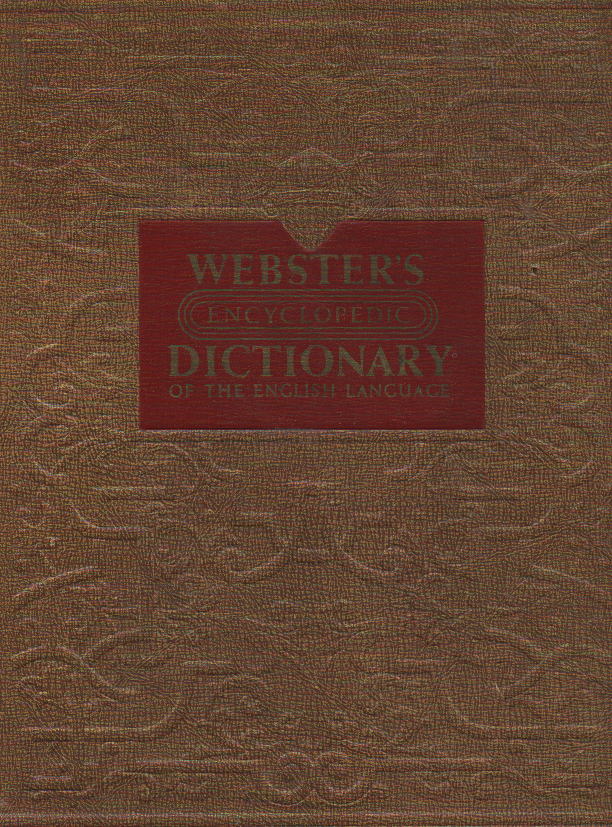
Websters Dictionary - Marijuana
 
WEBSTER'S ENCYCLOPEDIC DICTIONARY OF THE ENGLISH LANGUAGE Copyright 1957 - H.S. STUTTMAN Co.
(from page 2681) marijuana or marihuana (ma re hwa na) n. A weed or herb, growing in many parts of North America; the dried leaves of the plant, which have narcotic qualities when smoked in cigarettes; sometimes called the assassin of youth.
Marijuana, or Hashish, a subtle, crazing drug which is being surreptitiously sold in U.S. in the form of cigarettes. Narcotic officials named it 'The Assassin of Youth,' and state that it is as dangerous as a coiled rattlesnake. Its effects when smoked vary with different Individuals. It may make of its victim a philosopher, a joyous reveler, a mad insensate, or a fiendish murderer. Its purveyors whisper into the ears of Am. youth the wonders of a new cigarette with a real thrill, and without harmful effects. Students are lured to its use by promises of resultant keenness of mind, the easy solving of problems, an aid in exams. An addict was hanged in Baltimore in 1937 for a criminal assault on a ten-year-old girl. In Fla. a crazed youth killed his father, mother, two brothers, and a sister. In more than 30 cases of murder or degenerate sex crimes in 1937, marijuana proved to be a contributing cause. See Hashish.
(page 1976) HEMP (hemp) n. 1 A tough-fiberded plant from which rope and certain coarse fabrics are made. 2. Hashish, a narcotic and intoxicating drug obtained from the Indian hemp. 3. Slang. The rope used for hanging people. Hemp'en adj.
Hemp, commercial name for the textile fibers yielded by several unrelated plants, but strictly used only to describe those produced by Cannabis sativa, native to s. Russ., Per., and parts of China. This plant is characterized by a straight undivided stalk, usually from five to eight ft. high, but sometimes attaining a height of 18 ft. The best hemp comes from Italy; it is also cultivated in Russ., the Philippines and elsewhere. It is mostly used in the mfr. of rope and strong twine, and is woven into sail-cloth and fire-hose. For making canvas and sacking it has been largely replaced by jute, which is cheaper. The Arabs give the name hashish to a preparation of the leaves. Hemp also has useful medicinal properties.

Thursday, May 31, 2012

Watch this video and ask yourself why marijuana has not been Legalized.

Tuesday, May 22, 2012

New Poll 56% of Americans Want Legal Marijuana

On May 12, 2012, Rasmussen Reports conducted a survey of 1,000 likely voters nationwide. They asked, “Would you favor or oppose legalizing marijuana and regulating it in the similar manner to the way alcohol and tobacco cigarettes are regulated today?”
The poll affirms, once again, that the tide of public opinion continues to turn in our favor. Fifty-six percent of respondents stated they would support legalizing and regulating marijuana in a similar manner alcohol and tobacco. Only 36% were opposed to the concept and 8% were undecided.
You can view more information about the poll on Rasmussen Reports’ website here.
A previous poll conducted by Rasmussen Reports in April reported that 47% of adults “believe the country should legalize and tax marijuana in order to help solve the nation’s fiscal problems.” Forty-two percent of respondents disagreed, while ten percent were undecided.
In 2011, a nationwide Gallup poll reported that 50 percent of Americans support legalizing the use of cannabis for adults. Forty-six percent of respondents said they opposed the idea.
The 2011 Gallup survey results marked the first time that the polling firm, which has tracked Americans’ attitudes toward marijuana since the late 1960s, reported that more Americans support legalizing cannabis than oppose it.

Form a Study Committee on Marijuana Policy

Indiana
-------
State Sen.  Karen Tallian wants to make most marijuana possession cases misdemeanors.  What a change that would be from a toke-free Indiana. 

Tallian, D-Ogden Dunes, did not request a committee vote on Senate Bill 347 but took nearly an hour to explain how reducing criminal penalties for marijuana possession could benefit Indiana. 

It would have the effect of freeing up at least 250 beds a year in the state prison system and thousands of beds in county jails, according to the nonprofit Legislative Services Agency. 

In Indiana, possession of an amount of marijuana is punishable by up to a year in jail and a $5,000 fine.  That's among the toughest penalties in the nation. 

"Marijuana possession is a victimless crime, and there's no reason to do this to our citizens, especially our our young people," Tallian said. 

But is it truly a victimless crime?

We have been told for years that marijuana is a gateway drug that leads to more serious illegal drugs.  That argument must not be ignored in the discussion of whether to ease penalties for marijuana possession. 

And does medicinal use of marijuana actually fight disease and ease symptoms, or would it simply create a state full of hypochondriacs who see various maladies as a way to legally possess an otherwise illegal substance?

The Criminal Law and Sentencing Policy Study Committee discussed this issue July 28, but four hours of conversation on this issue aren't enough to reach a consensus on the ramifications of easing penalties. 

This is a subject that should be discussed by a separate legislative study commission this summer to weigh both the financial costs of enforcement and the social cost on people who use marijuana as an entry drug, leading to more dangerous drugs. 

Tallian said she "wanted to continue laying the groundwork" instead of asking for a vote in an election year.  Part of that groundwork should be pressing for the study commission to come up with definitive answers on the costs and benefits of easing penalties for marijuana possession.

Does Oprah Smoke Weed?